Your Memories Are One Drop Away From Gone
A hard drive fell off a shelf and took ten years of family photos with it. Every digital medium we trust has a quieter expiration date than we think.
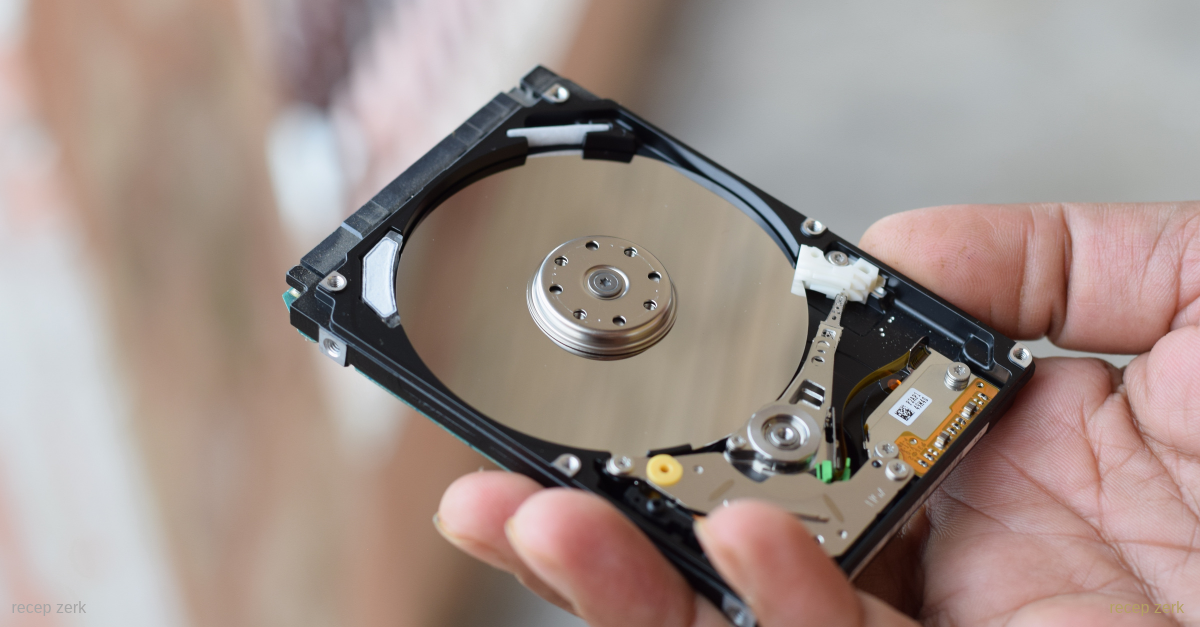
A few weeks ago, an external hard drive fell off a shelf.
That's it. No flood, no fire, no dramatic failure. Just gravity, a bad angle, and a sound that immediately felt wrong. We picked it up, plugged it in, and heard the kind of clicking that you don't need to be a technician to understand. Something inside had broken.
That drive held ten years of our family's life. Vacations, birthdays, old phones backed up before they were replaced. Photos of places we'd been together, videos of moments we didn't think we'd need to protect because they were just... there. Safe. Stored.
We started making calls. The quotes came back in the thousands of dollars. Apparently this is what physical data recovery costs when a drive has sustained impact damage. The data is likely still there, encoded on platters that are no longer spinning correctly. Getting to it requires a clean room, specialized equipment, and expertise that doesn't come cheap.
So now we're weighing it. Sitting with a number and asking ourselves what ten years of family memories are worth. Which is a strange question to have to answer.
We thought digital meant permanent
There's a timeline worth knowing.
An inscription carved into stone lasts roughly ten thousand years. Text on parchment, around one thousand. Film, about a hundred. Vinyl records, fifty years.
And digital? We assumed digital meant forever. Zero degradation, perfect copies, infinite replication. We moved everything off physical media because digital felt more reliable, more modern, more safe.
But not a single digital medium has actually achieved long-term success. The formats we trusted have quietly failed us, one generation at a time.
Remember CDs? In the 1980s they were marketed as nearly indestructible. Libraries, archives, families, everyone adopted them. Then researchers at France's National Laboratory of Metrology found something unsettling: discs that were supposed to last a hundred years were losing data within one to five years. Manufacturing impurities, oxidization, label ink seeping through the disc's layers. Fifteen percent of CDs tested had a life expectancy of less than five years. The promises made at launch had no basis in reality.
Hard drives are warrantied for five years. Five. The read head inside floats at a distance from the platter that researchers compare to a Concorde flying one meter above the ground at full speed. The smallest particle of dust, the slightest shock, and the head touches the platter. When that happens, the drive is gone.
USB drives and SSDs have a finite number of read-write cycles. Flash cards in cameras wear out. Cloud services get discontinued, change their pricing, or simply disappear.
Every medium we've trusted with our digital memories has had a hidden expiration date we weren't told about.
The illusion of backup
Most people's backup strategy is one of these: an external hard drive sitting on a shelf, or the vague feeling that everything is "in the cloud somewhere."
Both feel like safety. Neither is a plan.
A single hard drive is a single point of failure. It doesn't matter how reliable it is statistically. If it falls, if it overheats, if a power surge hits at the wrong moment, everything on it is at risk. The drive that held ten years of our family's photos was doing exactly what we asked it to do. It was just also one unlucky fall away from becoming a very expensive problem.
Cloud storage is better, but not unconditional. Services shut down. Accounts get locked. Subscriptions lapse and content disappears. Formats change and old files become unreadable. And the data you put there is under terms of service you probably didn't read, stored on infrastructure you have no visibility into.
Redundancy is the only real answer. The same data in multiple places, at least one of which is physically separate from the others. It's not complicated. It's just easy to put off until something breaks.
What this actually costs
We're still in the middle of this. The firm we spoke with is optimistic about recovery. The data is probably there. Getting to it is a matter of resources.
And that's the strange part of this whole experience. At no point did anyone ask us whether these memories were worth protecting. The drive held everything automatically, quietly, without asking if we had a plan for when it failed. The question of what it's all worth only came up after something went wrong.
Ten years of family photos shouldn't require a financial decision to retrieve. But here we are.
The cost of prevention, an extra backup drive, a cloud subscription, a simple redundancy system, is a fraction of what recovery costs. The inconvenience of setting it up takes an afternoon. The inconvenience of not having done it can cost thousands of dollars and something that money can't replace if the recovery doesn't work.
The stone carver knew something we forgot
There's something humbling about that timeline. Ten thousand years for stone. One thousand for parchment. And we built a world where a shelf, a moment of bad luck, and a brief mechanical failure can erase a decade.
We didn't carve our memories into stone. We trusted them to a spinning magnetic platter that costs fifty dollars to replace but thousands to recover from.
The stone carver worked slowly and with intention, knowing the material was permanent. We moved fast and assumed the medium would handle the rest.
It won't. We have to.
If you haven't set up a redundant backup system, today is a better day than tomorrow. The 3-2-1 rule is a good starting point: three copies of your data, on two different types of media, with one stored off-site.
Frequently Asked Questions
How long does digital storage actually last?
Much less than most people assume. CDs marketed as lasting a hundred years were found to fail within one to five years, hard drives are typically warrantied for only five, and SSDs and USB drives wear out after a finite number of read-write cycles — compare that to roughly a thousand years for parchment or ten thousand for stone.
Is keeping files on a single external hard drive a safe backup strategy?
No. A single hard drive is a single point of failure — one fall, one power surge, or one mechanical failure can destroy everything on it, no matter how reliable it's rated.
Is cloud storage alone enough to protect my photos and files?
It's better than a single drive, but not unconditional. Services shut down, accounts get locked, subscriptions lapse, and formats change — relying on the cloud as your only copy still carries real risk.
What's a practical way to back up family photos so they don't get lost?
The 3-2-1 rule: keep three copies of your data, on two different types of media, with at least one copy stored off-site.